
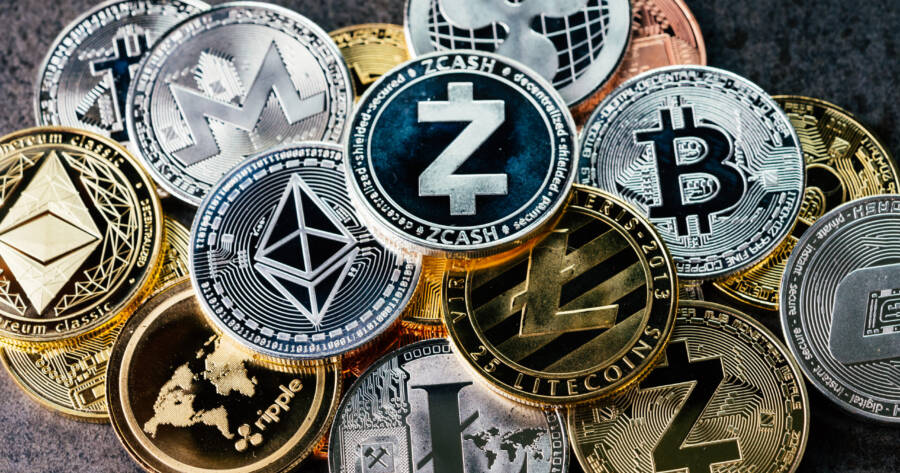
Bitcoin tends to grab most of the headlines, but it’s only one piece of a much larger crypto universe. Behind the scenes, developers and communities are building other digital coins and blockchain projects that aim to do far more than simply hold value. Some focus on powering smart contracts, others target faster payments, lending, or even internet jokes turned investments. If you’re curious about what exists beyond Bitcoin, here’s a tour of notable alternative cryptocurrencies.
The Rise of Altcoins
In the cryptocurrency world, there’s Bitcoin and then there’s every other coin. These other players are often known as Altcoins. They all serve slightly different purposes, but it general they function the same. That is, you buy them at a set price with U.S. dollars and store them in some form of a crypto wallet.
Other than Bitcoin, the next biggest player is probably Ethereum. There’s also Litecoin, Cardano, Bitcoin Cash, Stellar, Tether, Ripple, and of course, Dogecoin. A new wave of seemingly Reddit-sponsored coins like Boozemoon, HODL, Safemoon, and SHIBA INU are also popping up every week.
Ethereum (ETH)
Based on blockchain and smart contracts, the Ethereum network is built with transactions being verified through a peer-to-peer consensus. The idea is that when someone makes a transaction on the network, it will pay Ether, the network’s coin. Then it’s paid to computers around the world to talk to each other to verify the authenticity of the transaction.
Smart contract is another innovation of the Ethereum network that can become a game changer. Right now, many finance applications are already being built on the Ethereum network to facilitate financial transactions. As of early 2021, Ethereum’s total market cap is only about 20% the size of Bitcoin’s. Most major crypto selling websites offer Ethereum.
Litecoin (LTC)
Litecoin is actually older than Ethereum, launching in 2011. (Ethereum emerged in 2014). It’s sometimes referred in partnership as the “silver” to Bitcoin’s “gold.” It was created by former Google engineer and MIT graduate Charlie Lee. While Litecoin is very similar to Bitcoin, it offers faster transaction confirmation times due to its underlying block generation rate.
Litecoin’s current market capitalization is about $8 billion (subject to change). It’s currently priced around $106 per coin (CAD). Unlike Bitcoin, retail has been slow to adopt Litecoin as an acceptable currency. Although more merchants are slowly accepting it, it remains a fairly niche coin when it comes to actually buying things.
Cardano (ADA)
You may not have heard of Cardano before. It’s much less popular than many other cryptocurrencies. However, it’s growing fast. Cardano was co-founded by Charles Hoskinson, who previously helped found Ethereum. The rest of the Cardano team is made up engineers, mathematicians, and cryptography experts. They expertise behind this coin is impressive.
Cardano is currently selling for about $0.38 USD (but this is subject to change). That makes it a very affordable coin for those wishing to invest in an emerging brand. A year ago, the price was a mere nine cents per coin. It reached a high of $2.64 in August, 2021. However, like Bitcoin, a limited number of Cardano coins will be made available. It will max out at 45 billion coins (of which 32 billion are already available).
Bitcoin Cash (BCH)
When cryptocurrency factions can’t agree, they often split. That’s how Bitcoin Cash came to be. There was a debate over the stability of Bitcoin, since its network is limited to one megabyte blocks. When an agreement couldn’t be made, some of the Bitcoin team splintered off to create Bitcoin Cash, with eight megabyte blocks. The idea was that the increased block size could hold more transactions, and go faster.
Bitcoin Cash hasn’t quite reached the levels of internet fame that it’s namesake original has. It currently sells for about $700 CAD per coin, but this is subject to change. It has a market cap of roughly $10 billion. Most popular crypto trading sites offer BCH as one of their main coins to buy and sell.
Stellar (XLM)
Like other coins, Steller aims to provide financial solutions in a decentralized way. For example, you can use Stellar to quickly conduct large transactions that would take days to complete — all without paying banks, investment firms, or other middle-men a fee. This cryptocurrency has marketed itself as more of an enterprise solution. However, it’s still available to the general public. Oddly, the individual coins in Steller are called Lumens.
Stellar was founded by Jed McCaleb, who originally worked on Ripple (more on that in a minute). One Lumen currently sells for about 34 cents USD (subject to change), making is an extremely cheap coin to dabble in.
Tether (USDT)
Tether was one of the first of the so-called “stablecoins.” In order to get away from the massive swings of Bitcoin (and others), Tether attempted to tie its overall value to an existing market currency. In this case, Tether’s price is directly related to the price of the United States dollar. In theory, this also helps users to convert U.S. dollars to Tether (and back) with extreme ease and speed.
Tether was launched in 2014, but is already a top-five cryptocurrency in terms of market capitalization (close to $99 billion in early 2024). It’s valued this week at almost exactly one dollar per coin. And of course, that’s the point. Today, it’s priced at $1.40 USD, but this is subject to change. Remember, this coin is focused on stability, not wild investment swings and crazy growth.
Ripple (XRP)
As of 2025, Ripple is the world’s third largest cryptocurrency, in terms of market capitalization. It uses a technology that can process transactions in just seconds, with very little cost. In fact, many banks already use XRP payment systems in order to process transactions. That’s not exactly the same as using Ripple as a primary currency, though.
The words “Ripple” and “XRP” are often used interchangeably. Although XRP is the symbol used, they are actually different things. Ripple is the name of the company behind XRP technology. It was originally aiming to be a peer-to-peer banking network, where users could take out loans from each other while bypassing a bank entirely. This network failed to take off, and Ripple pivoted to cryptocurrency in 2012. They changed their name to OpenCoin.
These days, XRP is primarily used to help facilitate exchanges between two different currencies. One XRP coin is worth roughly $2.18 USD today.
Safemoon, HODL, and Boozemoon
Wait, what? If you’re wondering what the heck HODL or SafeMoon is, you’re not alone. These are relatively brand new cryptocurrencies, popping up from the “MemeStonks” phenomenon that took Reddit by storm in early 2021. SafeMoon was launched in March 2021, with an original supply of one quadrillion coins. Somehow, the developers managed to destroy 223 trillion of them though. That leaves 777 trillion available for the market at launch. They have since burned even more, leaving about 600 trillion coins.
The “key” to SafeMoon is that there’s a fee for selling it (but not buying). If you sell SafeMoon, you pay a 10% fee. The fee is then distributed to existing holders, which in theory will increase the coin’s value every time some are sold. SafeMoon launched at a ridiculously low price of $0.00000001. That’s mere fractions of a penny. It did rise to $0.00014 at its highest, which was a 20,000% increase at the time.
Ultimately, SafeMoon isn’t really safe. With developers burning coins, no legitimate uses, and an infinitely small valuation, it feels like a bubble waiting to burst. (Although the same could be said about any other cryptocurrency too). The sole game plan seems to be to whip Reddit up into a frenzy of SafeMoon buying to drive up the price.
What About NFTs?
You may have heard of non-fungible tokens (NFT). For the layman, a NFT is a unique digital good that you can buy, sell, and trade. The NBA has gotten in on the action and launched NBA Top Shot. In a nutshell, they created video clips called “moments” that people can own. The idea is very similar to the baseball cards concept, only that it’s being applied to digital assets. Yes, you can totally create your own clips that would be almost identical to any particular one sold at the official store. However, you wouldn’t technically “own” it like you do with NFTs.
The whole industry is going a little nuts right now. There are “moments” from the NBA Top Shop store worth $250,000 dollars. And artist Beeple sold some digital art for $69 million. Yes, that’s million with an “m.” These kinds of valuations can’t continue, can they? It’s hard to say.
The Real Value is in Decentralized Finance
For crypto bulls, NFTs are luckily not the only financial applications that’s booming. For example, Aave is a protocol that allows borrowers and lenders to be paired together. What essentially happens is that lenders tell the protocol that they have assets to lend by a process known as “deposit”. When a borrower requests a loan from the protocol, they will put up the required collateral. Then Aave will automatically facilitate the transfer from all the lenders who deposited their assets to the borrower.
The beauty of these decentralized finance applications is that there’s no centralized figure or bank. Thus, there’s no middlemen cutting themselves a piece of profit to pay for. The other beauty is that you can lend (or borrow) as much (or as little) as you want. For example, even if you want to lend $1,000 and there aren’t any borrowers that want small loans, the protocol will automatically group up all the small loans for a larger borrower.
Governance Tokens
While we are talking about Aave and altcoins, we should also discuss the idea of governance tokens. Aave, for instance, issues a Ethereum-based governance token with the same name. It’s commonly referred to as AAVE. To the outside world, the token trade like any other cryptocurrency that can be bought and sold for profit. On the other hand, the token serves a few unique purposes that differs from coins such as Bitcoin or Ether.
First, AAVE holders are stakeholders in the protocol. They can discuss and vote on improvements to the protocol. This is similar to being able to vote on proxies when you own stocks in a company. Second, the value of AAVE tokens act as a backstop for the protocol in case there’s a shortage of capital. Known as the “Safety Module”, AAVE tokens will be sold to cover lenders’ assets if there ever was a deficit.
What About Meme Coins Like Dogecoin?
Critics of cryptocurrency argue that the many of these coins act similar to a Ponzi scheme. After all, there’s really no physical value to any of these coins. They are all getting bid up because a bunch of people heard that others making money and just want to get in on the action.
Dogecoin is perhaps the most popular example of a coin that serves no purpose. Originally developed in 2013, two software developers decided to build a meme coin as a joke called Dogecoin. Furthermore, the developers intentionally created the coin so 10,000 coins are mined every minimum. There is an infinite supply of Dogecoin, which should eventually render it useless. Despite that, it rose dramatically in early 2021. The link above is a more detailed look at Dogecoin, which has been propped up, in part, by Tesla CEO Elon Musk.
The Dogefather
Speaking of Musk, he’s been a huge supporter of cryptocurrencies in general. You’d think a billionaire wouldn’t care much about a meme coin worth less than a dollar, but Dogecoin got a whole new life when Musk began tweeting about. He even branded himself the “The Dogefather.” His electric car company was one of the first major companies to accept Bitcoin as a currency. Now, he’s thrown his support behind Dogecoin too.
After the Gamestop and AMC mania, the traders from WallStreetBets started pumping Dogecoin. Then Mark Cuban, owner of the Dallas Mavericks, got involved and decided to accept Dogecoin as payment. To top things off, Musk got in and pushed the coin’s value through the roof via a series of tweets.
Shibu Inu
The mania didn’t stop with Dogecoin either. If you thought the idea of a meme coin was crazy, you’d go insane to learn that there’s a meme coin of a meme coin. Shibu Inu is such a coin. Immediately after the Dogecoin mania, the coin developed as a meme to Dogecoin shot up 15 times in a matter of one week. Talk about crypto-mania!
The hoopla’s died down a but since it was released. Many people made some money, but far more lost quite a bit. As with any asset bubble when emotions are high, those who bought in near the peak lost their shirts. Still, meme coins weren’t all that bad.
Dogecoin, for example, started out as a joke. But it’s done some good in the world too. Roughly one year after creation, Dogecoin owners organized a fundraising event on Reddit. They raised more than $30,000 USD to fund the Jamaican bobsled team to compete in the Sochi Winter Olympics. Two months later, they raised another $55,000 to sponsor NASCAR driver John Wise’s Talladega.
At the height of the Shiba Inu’s mania, the founder of Ethereum donated a gigantic portion of the coins he was gifted to the COVID-19 relief efforts in India. The donation was worth $1 billion dollars, at the time.
The headline amount seems much higher than the benefit really is, though. Due to how thinly traded these Shiba Inu coins are, it’s estimated that the $1 billion is really only worth a few million even at the height of the coin’s valuation. Unfortunately, the value of the coin’s already dropped by more than five times since then, diminishing the impact of the donation.
The Bottom Line
What a year it’s been for cryptocurrencies. Recently, China reiterated its ban on financial institutions facilitating cryptocurrency transactions. The U.S. Treasury also proposed new reporting rules for those who make a larger than $10,000 transfer. Even Elon Musk’s love for Bitcoin is dying, as Tesla no longer accept it as payment (Musk cited growing environmental concerns over Bitcoin mining as the reason). In mid-May of 2021, the value of most cryptocurrencies tanked by almost 50%. Only a few days later, though, they were back on the rise. Where does the roller coaster end?
Are these digital coins really the future of money? Or are they just the next investment bubble, ready to pop any second? Even if they do stick around for good, their valuations still seem extreme. After all, it’s really just a bunch of digital ones and zeros, right? Most people don’t even buy cryptocurrencies to pay for goods and services, like you’d expect out of something hoping to replace traditional money. Instead, they are using it as wildly volatile investments. The future for cryptocurrencies is definitely an unknown — but it sure is exciting.